
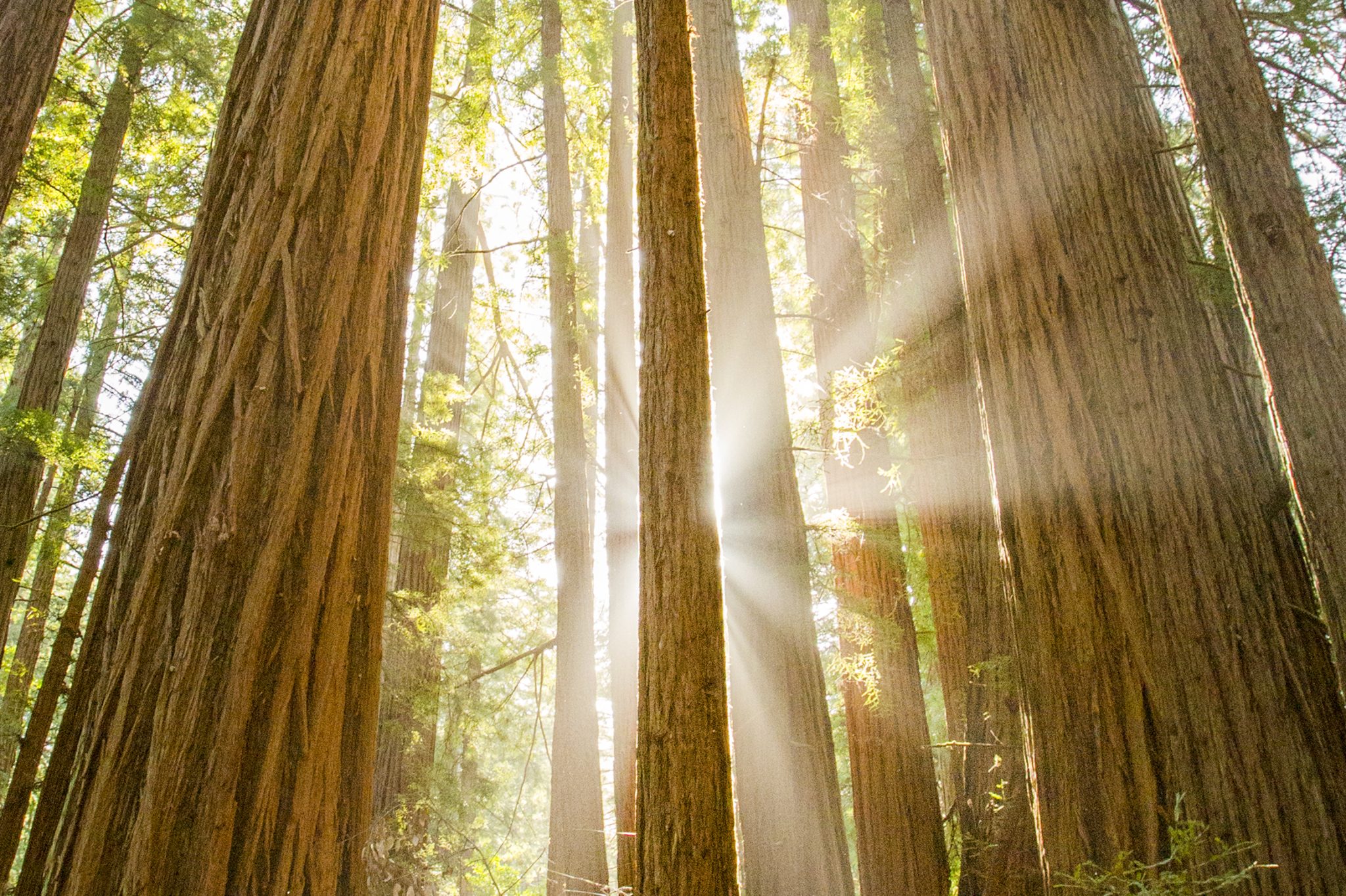
Christianity and many other religions teach that God is omnipotent and cannot be perceived by the natural senses. If a person begins to seek God, they inevitably face the question: where and how can they encounter Him? Many answers have been offered: some say God can be found in silence, others in nature, and still others in a building considered sacred.
According to the Bible, God can be encountered in a temple. However, the concept of temple is not unambiguous. To understand where merciful God can be found, one must understand where His temple is and what it is. To do this, the seeker must open the Bible, for the God of Christianity reveals Himself and His will only in His Word
The Universe—God’s Original Temple
In many religions, some part of the universe—such as celestial bodies or nature—is worshipped as god. According to Christianity, however, God is something much greater, and He has created all things. But if He created the world, it is reasonable to ask whether He can be encountered in the world.
This was indeed the case in the very beginning. The first pages of the Bible describe how God walked together with the human He had created in paradise, that is, the Garden of Eden. The Bible thus describes paradise as a place where God was present with the human beings He had created.
Later, the people of Israel saw paradise—and indeed the entire universe—as God’s original temple (Ps. 44:10, Ps. 78:69, Isa. 66:1). This connection was evident in all the temple buildings constructed later, which were deliberately decorated with garden motifs: golden flowers, palm trees, and pomegranates were pictured on the walls and furnishings (1 Kings 6:29, 1 Kings 7:18–20).
According to the Bible, however, humanity’s connection with God was broken by the Fall. As a consequence of sin, He drove man out of Paradise and “placed on the east side of the Garden of Eden cherubim and a flaming sword flashing back and forth to guard the way to the tree of life” (Gen. 3:24). This was also reflected in the subsequent temples: the curtain separating the innermost room was guarded by figures of cherubim, just as the gate of paradise was after the Fall.
God gave His people a place to meet with Him
After the Fall, however, God did not abandon His plan to give human beings an opportunity to live in communion with Him. He gave His people, who were traveling in the wilderness, instructions to build a tent as a dwelling place for His name. The people of Israel had just been freed from slavery in Egypt, and on Mount Sinai God told Moses how the tabernacle was to be built. When the tent was erected, “the cloud covered the tent of meeting, and the glory of the Lord filled the tabernacle” (Exodus 40:34). God chose to live in this portable sanctuary in the midst of His traveling people.
Generations later, King David of Israel dreamed of a more permanent place to serve God. God did not allow him to build it himself, but David gathered the building materials in advance and gave his son Solomon a clear task:
“Now devote your heart and soul to seeking the Lord your God. Begin to build the sanctuary of the Lord God.” (1 Chr. 22:19)
When Solomon’s temple was dedicated, the same phenomenon occurred on the Temple Mount in Jerusalem as had taken place in the wilderness of Sinai during the dedication of the tabernacle:
“When the priests withdrew from the Holy Place, the cloud filled the temple of the Lord. And the priests could not perform their service because of the cloud, for the glory of the Lord filled his temple.” (1 Kings 8:10–11)
From this point onward, Jerusalem and the temple became the center of the religious life of the people of Israel. The courtyards were a constant bustle: priests performed the morning and evening sacrifices, Levites sang psalms with their instruments, people brought their food and animal offerings, and teachers explained the word of God in the colonnades. The innermost room of the temple was the Holy of Holies, separated by a curtain, where only the high priest entered once a year on the Day of Atonement to make atonement for the sins of the people.
The message of the Old Testament is clear. Living God can only be encountered in aplace that He has Himself chosen as the dwelling place of His name.
Only God’s presence makes the temple holy
The Bible emphasizes that the Temple is the place where God’s name is encountered. His throne is in heaven (Ps. 11:4), and He acts according to His will in all things and everywhere. Human beings cannot confine God—or even God’s name—to a building they have constructed themselves. King Solomon understood this even in the dedication prayer for the temple. In the midst of the celebration, as the temple is filled with glory, the king asks: “But will God really dwell on earth? The heavens, even the highest heaven, cannot contain you. How much less this temple I have built!” (1 Kings 8:27)
When speaking of the temple, it is essential to understand that the temple is intended solely for God’s people—that is, for those who serve Him with all their heart. David asks in the Psalm: “Lord, who may dwell in your sacred tent? Who may live on your holy mountain?” (Psalm 15:1) And then he answers: “The one whose walk is blameless, who does what is righteous, who speaks the truth from their heart…” (Psalm 15:2–5).
The Bible, however, describes how the people of Israel turned away from God’s will and lived in sin. The prophets warned the people of God’s wrath, but they were not listened to. The people continued their sinful lives and trusted only in the fact that they had a temple where priests offered sacrifices for their sins. There are many passages in the Bible where God makes it clear that this is not according to His will.
Through the prophet Jeremiah, God warned: “Do not trust in deceptive words and say, ’This is the temple of the Lord, the temple of the Lord, the temple of the Lord!’” (Jer. 7:4). He described how evildoers “then come and stand before me in this house, which bears my Name, and say, “We are safe”—safe to do all these detestable things? Has this house, which bears my Name, become a den of robbers to you?” (Jer. 7:10-11) With this metaphor, God referred to a place where evildoers imagine they can be safe, just like thieves in their hideout.
Centuries later, during the time of the Second Temple, Jesus overturned the money-changers’ tables and repeated Jeremiah’s criticism: “Is it not written: ‘My house will be called a house of prayer for all nations’? But you have made it ‘a den of robbers’” (Mark 11:17). Jesus’ zeal was not directed at the trading itself, for money changers were needed so that Roman coins bearing the emperor’s image could be exchanged for currency acceptable for temple tax. Instead, Jesus objected to people using the temple and its sacred rituals as a justification for actions contrary to God’s Word and Spirit.
The prophet Ezekiel describes what ultimately happened when the people did not listen to Jeremiah’s warnings: “Then the glory of the Lord departed from over the threshold of the temple and stopped above the cherubim. – – The glory of the Lord went up from within the city and stopped above the mountain east of it”. (Ezek. 10:18, 11:23) The temple is thus a gift that can be lost. Soon after the glory of the Lord had departed from the temple, the Babylonians burned it down and forced the people into exile.
The Return of God’s Glory
Despite human sin, God remained faithful. He still did not want to abandon His plan to have people dwell in fellowship with Him. Through the prophet Jeremiah, He promised:
“Yet in the towns of Judah and the streets of Jerusalem that are deserted, inhabited by neither people nor animals, there will be heard once more the sounds of joy and gladness, the voices of bride and bridegroom, and the voices of those who bring thank offerings to the house of the Lord, saying, ‘Give thanks to the Lord Almighty, for the Lord is good; his love endures forever.’” (Jer. 33:10–11)
The people, when freed from exile, returned to Judah, rebuilt the temple, and began worshipping there. But contrary to expectations, the Bible does not mention this time that God’s glory would have returned to the temple. Even the Holy of Holies was empty, for its most important object, the Ark of the Covenant, had been lost.
The people of Israel, however, knew the Scriptures and awaited the fulfillment of their promises: the return of God’s glory. This expectation was strongly linked to the expectation of the Messiah, that is, the anointed king, the liberator of the people. For centuries, the people waited. The temple was renovated and expanded several times, and during the reign of Herod the Great, it grew to be more magnificent than ever. However, no human endeavor could bind God to a specific place.
Finally, the waiting was rewarded, and God’s glory returned! The New Testament writings tell us how it happened; namely, it did not happen in the form or in the temple that the people had expected.
The True Temple
Early in the Gospel of John there is a sentence:
“The Word became flesh and made his dwelling among us. We have seen His glory…” (John 1:14)
The Greek verb eskēnōsen, indicating dwelling, literally means to pitch a tent. In his choice of words, John is consciously referring to the Old Testament tabernacle, which served as the temple during the journey in the wilderness. Furthermore, when speaking of the glory associated with the tabernacle, he meant that with Jesus, God’s glory had returned to the temple—the temple that was Jesus Himself.
But how can “someone” be a temple?
In Jesus’s time, the era of the man-made temple was coming to an end, and he left no room for ambiguity. He said plainly: “I tell you that something greater than the temple is here”. (Matt. 12:6). Jesus was not competing with the temple in Jerusalem. Instead, he was the one to whom all the sacrifices in both the tabernacle and the temple of Jerusalem pointed.
When the Jews demanded a sign from Jesus that would justify his actions on the temple grounds, he spoke words that no one understood at the time: “Destroy this temple, and I will raise it again in three days” (John 2:19). The Gospel writer explains this to the reader: “But the temple he had spoken of was his body” (John 2:21).
Jesus was the Son of God, so “in Christ all the fullness of the Deity lives in bodily form” (Col. 2:9). Jesus’ body would be broken on the cross, and when he would rise from the tomb, a new temple would come forth, one that no power on earth could ever tear down again.
At the moment Jesus died on the cross, “the curtain of the temple was torn in two, from top to bottom.” (Mark 15:38). Two conclusions can be drawn from this miracle: the era of the temple of Jerusalem as a place of encounter with God had finally come to an end, and the way to the Most Holy Place—that is, communion with God—was now open. The Epistle to the Hebrews states:
“Therefore, brothers and sisters, since we have confidence to enter the Most Holy Place by the blood of Jesus, by a new and living way opened for us through the curtain, that is, his body, and since we have a great priest over the house of God…” (Heb. 10:19–21)
Where is God’s temple today?
The Bible clearly states that God can only be encountered where His name is present. The Bible also states that this true temple is Jesus Christ.
However, Jesus has physically ascended to heaven and sits at the right hand of God the Father. So how can we pass “through His body” and enter into life in communion with God? Must we, through our own efforts—such as prayer or meditation—establish a connection with the heavenly realms?
No, the Bible does not give such advice. The Apostle Paul writes: “Do not say in your heart, ‘Who will ascend into heaven?’ (that is, to bring Christ down)” (Rom. 10:6). The Bible’s teaching about the temple of God does not end with Jesus’ resurrection.
Before his death, Jesus had promised to give His disciples the Holy Spirit, who would first of all “teach you all things and will remind you of everything I have said to you” (John 14:26). Another promise associated with the Holy Spirit was that Jesus Himself, through His Spirit, would come to dwell in His own. (John 14:18, 20)
The promise of the Holy Spirit was fulfilled fifty days after the Resurrection, when the disciples were gathered in Jerusalem: a sound like a violent wind came from heaven, and the disciples saw what seemed to be tongues of fire that separated and came to rest on each of them, and they were filled with the Holy Spirit (Acts 2:1–4). The glory of God, which had previously descended as fire upon both the tabernacle and Solomon’s temple, descended upon the crowd on the first Pentecost.
What can we conclude from all this? That wherever Jesus’ own people are—that is, God’s church—there is the body of Christ, that is, God’s temple. God is not encountered today in a building, on a mountain, or in a holy place. He is not encountered where people rely on their own holiness or on impressive buildings. God is encountered where His congregation gathers around His Word and the Gospel: “For where two or three gather in my name, there am I with them” (Matt 18:20).
Paul states this to the Corinthians: “Don’t you know that you yourselves are God’s temple and that God’s Spirit dwells in your midst?” (1 Cor. 3:16). In the same letter, he later reminds them: “You are the body of Christ, and each of you is a part of it” (1 Cor. 12:27). The Apostle Peter, in turn, calls out: “As you come to him, the living Stone — — you also, like living stones, are being built into a spiritual house to be a holy priesthood” (1 Pet. 2:4–5).
This building is still growing today, and its builder is God himself. You are called to be a living stone in the temple where Jesus’ own people, empowered by the Holy Spirit, declare people’s sins forgiven.
God has promised to be present wherever His own gather in the name of His Son. So do not ask, “Where can I find Him?” but rather, “Am I where He is?” If you want to enter God’s temple and have your sins forgiven, get in touch—you can do so using the form at the end of this article.
Author: Kingdom of Peace
Photo Credits: iStock