
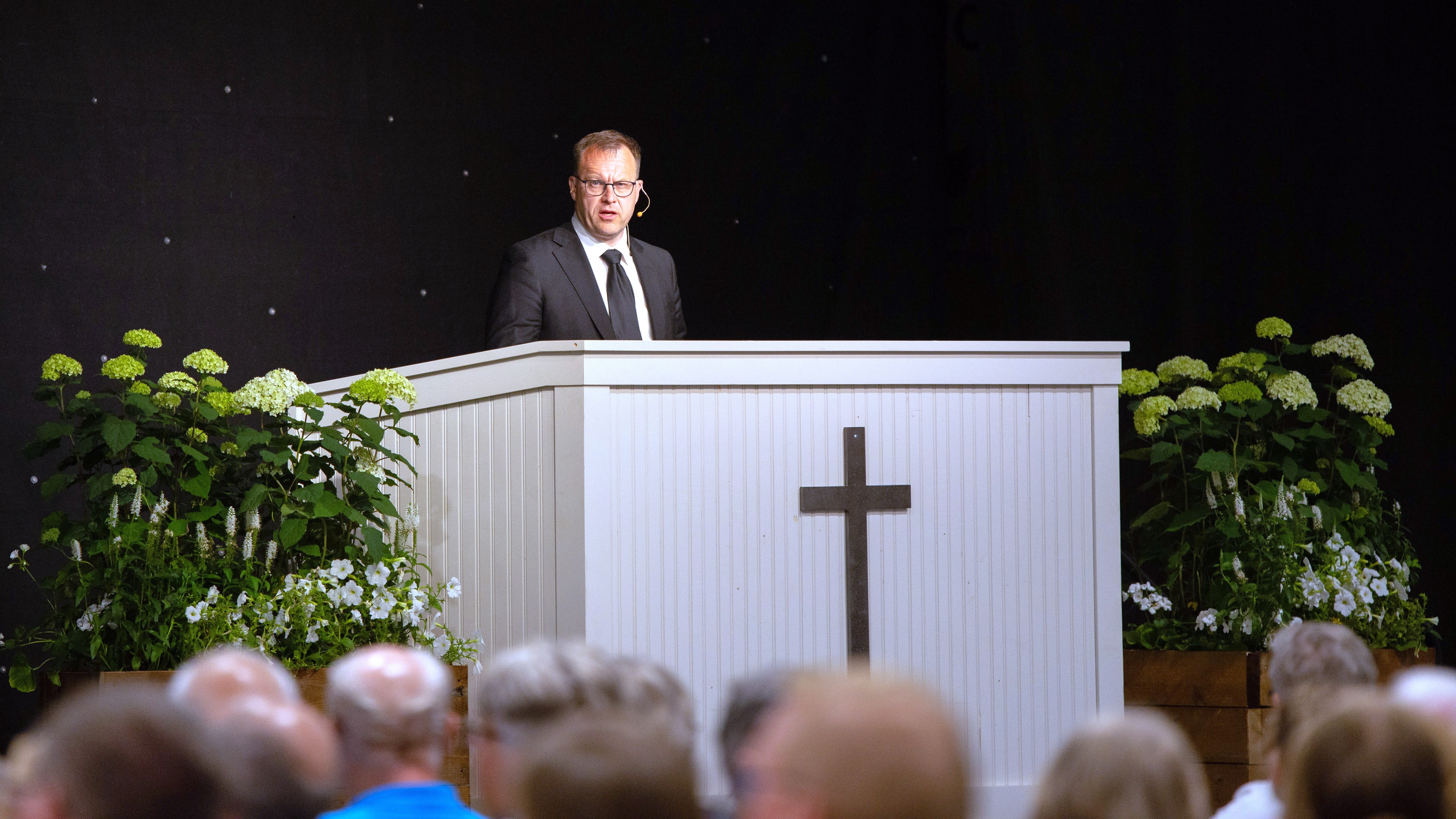
In some languages and in the Christian tradition of some countries, the distinction between preaching and prayer is blurred: preaching has elements of prayer, and prayer has elements of preaching. However, the essential question is what is essential for salvation.
Salvation is promised to those who believe. However, the Bible testifies that faith does not come from ourselves. Instead, it comes from believing in the gospel of the forgiveness of sins. When our sins are forgiven, we are believers. And when we die as believers, we can, on the day of resurrection, be among those who will hear these words from Jesus Christ, the Judge:
“Come, you who are blessed by my Father; take your inheritance, the kingdom prepared for you since the creation of the world.” (Matthew 25:34)
How Can I Be Saved?
So, how can I have my sins forgiven? Or, in other words, how can I be saved? The Prophet Joel writes:
“Everyone who calls on the name of the Lord will be saved.” (Joel 2:32)
According to these words, it seems very simple: all that is needed is to “call on the name of the Lord”. But does this mean that everyone who merely utters the word ‘Lord’ will be saved? Surely not. Jesus Himself says:
“Not everyone who says to me, ‘Lord, Lord,’ will enter the kingdom of heaven, but only the one who does the will of my Father who is in heaven.” (Matthew 7:21).
Jesus teaches us what the will of his Father is:
“For my Father’s will is that everyone who looks to the Son and believes in him shall have eternal life, and I will raise them up at the last day.” (John 6:40)
This means that we human beings can be saved only if we have a living faith in Jesus. Only when we truly believe can we genuinely call on the name of the Lord.
No One Can Hear Without Someone Preaching
Indeed, the apostle Paul teaches the same truth, but in different words:
“Everyone who calls on the name of the Lord will be saved. How, then, can they call on the one they have not believed in? And how can they believe in the one of whom they have not heard? And how can they hear without someone preaching to them? And how can anyone preach unless they are sent?”
After these irrefutable words, Paul continues:
“As it is written: ‘How beautiful are the feet of those who bring good news!’ But not all the Israelites accepted the good news. For Isaiah says, ‘Lord, who has believed our message?’ Consequently, faith comes from hearing the message, and the message is heard through the word about Christ.” (Romans 10:13-17)
Only Those Who Are Sent Can Preach
We can learn several important truths from this. First, no one can truly call on the one in whom he or she does not believe. Second, no one can believe in the one of whom he or she has not heard. Third, no one can hear without someone preaching to him or her. And fourth, no one can preach the true Word of God unless he or she is sent.
The sender, of course, is the Father Himself. He sent His only Son into the world. And Jesus, in turn, sent those who believed in Him:
“‘Peace be with you! As the Father has sent me, I am sending you.’ And with that he breathed on them and said, ‘Receive the Holy Spirit. If you forgive anyone’s sins, their sins are forgiven; if you do not forgive them, they are not forgiven.’” (John 20:21-23)
I Must Hear the Preaching
Consequently, if I want my sins to be forgiven during my lifetime, I must hear the preaching of the forgiveness of sins. Only those who already have a living faith in Jesus can preach this forgiveness to me. And when I have heard that preaching, I can truly call on the name of the Lord.
This does not mean that I must constantly pray aloud or repeatedly say the words ‘Lord, Lord’. Rather, it means that my heart will call upon and pray to the Lord in the midst of my everyday life: I trust in God when I face needs and challenges, and I give thanks to the Lord because He has cared for me and protected me in many ways.
Where Can I Hear That Preaching?
Jesus sent his disciples to preach the forgiveness of sins. Many who heard their preaching received forgiveness and became believers. As believers, they were able to preach the forgiveness of sins to their relatives, friends, and others—even to the next generation. Many who heard their preaching believed, and as believers, they in turn preached to new people.
For two millennia, believers have preached the forgiveness of sins to new generations. This is true even today: everyone who has a living faith in Jesus has his own sins forgiven and can preach the forgiveness of sins to others. If I want to hear the preaching of forgiveness for my sins, I must find a believer and have contact with him or her so that I can hear that preaching.
I can also hear this forgiveness of sins preached during a sermon; if a servant of the Word has a living faith, he can preach the forgiveness of sins in his sermon, and I can believe my sins forgiven and become a believer.
Is It Completely Useless to Pray?
Through prayer, I cannot receive forgiveness of sins and become a believer. So, if I am not yet a believer, I might ask: is it completely useless to pray? The answer is no. You can pray that you may find a believer who can preach to you the forgiveness of sins.
Cornelius, a Roman centurion, “prayed to God regularly” even before he became a believer. He did not receive the forgiveness of sins through prayer, but God did hear his prayer. God instructed him to “send men to Joppa to bring back a man named Simon who is called Peter.” Peter was a disciple of Jesus—a believer.
When Peter came to Cornelius’s house, he preached “that everyone who believes in Jesus receives forgiveness of sins through his name”. Through Peter’s preaching, Cornelius and his relatives and close friends received forgiveness of sins, and the Holy Spirit came upon them. (Acts 10)
Author: Kingdom of Peace
Image: LLC